

1. Learning the Relation between the Office Design and the Startup Culture
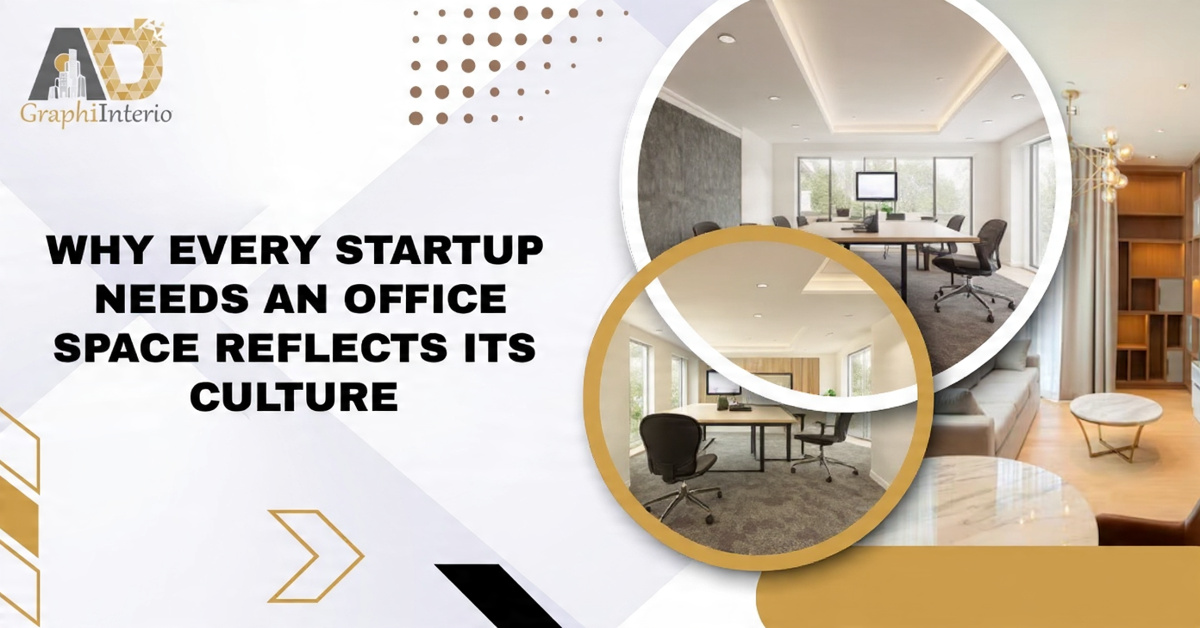
Culture is what defines a startup in the long term, although every startup has a starting point of an idea. Although people give birth to culture, leadership, and values, the office space equally contributes to strengthening the daily work and experience of a team. Startups are dynamic, creative, collegial, and flexible, and an appropriate office layout may enhance these qualities. Working in a setting that expresses your culture will not only be a comfortable spot to sit down and work but a kind of incentive to grow, since it is not just part of your brand but your personality.
2. The Effect of Office Spaces on the Employee Mindset
The motivation, creativity, and connectivity level of a team are of extreme importance to the success of a startup. This psychological environment is added with the help of office interiors. An untidy or unstructured environment restricts productivity, but a well-thought-out environment promotes concentration and creativity. As an example, open layouts, collaborative areas, and sparse divisions are an advantage to a startup in terms of encouraging open communication. Conversely, a culture of concentration may involve a startup relying on intensive work, investigation, or innovative thought that may prefer quiet pods or noiseless spots. The design turns out to be a mute contributor to anticipation and procedure.
3. Rethinking Visual Elements about Brand Identity
Startups strive to establish a good brand image using websites, marketing, and product design, but most of them fail to extend that image to their office. The office can be identified as a part of the brand immediately, as the visual elements in the workspace are colors, materials, signage, artwork, and textures. A young and audacious brand may incorporate vibrant colors and energetic art. A start-up, which is tech-driven, may tend to be minimalistic, clean, and use up-to-date materials. A company that is based on sustainability could demonstrate natural finishes, day-oriented designs, and environmentally friendly design features. As the environment reflects brand values, there is a sense of belonging among the employees, and it takes the visitor only a few steps to get familiar with your culture.
4. The Design of Spaces That Facilitate the Way Startups Work
Startups are run differently compared to conventional businesses. They think of a lot of ideas, take leaps and shifts between team and individual work during the day. These activities can be supported with a culture-reflective office space without strict patterns being imposed on the teams. As an example, team sitting can be flexible and split up according to the daily tasks. portable furniture and modular designs assist in immediate reorganization to use during presentations, meetings, or brainstorming. The corner of the lounge style stimulates informal consultations, whereas the individual meeting rooms facilitate the client calls to a point. It makes the office a resource that will enable agility, which is the core of startup success.
5. Improving Cooperation by designing it with care
Teamwork is the blood of a start-up. Whether it is product planning, brainstorming, or coming up with a sudden solution, the team should feel at home working together. A startup office design can also achieve natural collaboration by strategically placing breakout spaces, whiteboard-friendly spaces, clustering comfortable seating areas, and creative areas. Even the arrangement of desks can influence the frequency of interaction among the employees. A team-oriented culture is one that is value-based on common tables and an open layout. In the meantime, technology-integrated meeting rooms may be utilized by startups that combine both remote and on-site work to facilitate hybrid collaboration. Teamwork is painless when the physical design is in line with a collaborative culture.
6. Enhancing the Well-being and Retention of Employees
The employees in startups are usually associated with prolonged working hours, strict deadlines, and hectic working conditions. An ergonomics, wellness, lighting, and comfort-based workspace can greatly enhance satisfaction and retention. The natural light promotes the regulation of energy and mood, and ergonomic furniture avoids physical stress. Relaxing colors or plants have the potential to decrease stress levels and aid clarity of mind. The culture that puts the well-being of the employees first should demonstrate that with the help of calming design decisions, silent areas, and wellness-oriented rooms. The executive office gives the employees a message that they are comfortable in the workplace, and therefore they will be loyal and thus perform better in the long run.
7. Empowering Leadership Vision by Design
The cultural foundation of the company is created by its founders and leaders. The place of work is a chance to bring this vision to life physically. Regardless of whether the leadership is transparent, innovative, or creative, the interior design can be used to represent the values. Open meeting rooms are indicative of integrity and candor; innovation labs/ideation areas indicate curiosity and experimentation; artistic installations indicate creativity. When culture is tangible, leadership does not need to be repeated again and again in values; this will be known as natural through the environment.
8. Making Clients Impressed and Trusting
In the case of a startup, initial impressions are very important. The first thing that clients to your office is the sense of professionalism, stability, and confidence. An office that is well planned is a way to make the start-ups seem credible, serious, and devoted to quality. As a client perceives branding and well-planned spaces, and deliberate design, they will have more confidence in the company. Clarity of vision is also evident in an office that is culturally oriented. In the case of a tech start-up, which has modern interiors, it is more innovative, and in the case of a wellness brand, which has soft materials and natural elements, it is more relaxing and reassuring. This correspondence increases the credibility and the probability of successful partnerships.
9. Using Design as a Growth Strategy
A startup office is not only a workspace that will host employees, but is also a developing instrument. A culturally sensitive workspace will help attract more talent, enhance productivity, internal communication, friction in operation, and increase brand value. Employees work better when they have space. When clients like the space, they will have more trust in the company. Efficiency is enhanced by the design that promotes workflow. As startups mature, the culture of the company will change, and the office will be able to keep pace with modular and future-proofing design decisions. The perception of interior design as a strategic investment and not an expense assists startups in growing without fear.
The reason why Startups should not postpone investment in office design
Numerous startups believe that interior design is not an activity to spend on until they are stable. Nevertheless, the most vulnerable and significant culture is during the initial stages. Designing offices predetermines the first-day discipline, collaboration, creativity, and professionalism standards. It affects the team bonding and brand identity in the initial years. Delayed such investment may result in poor, inconsistent cultural development, morale, or an inappropriate brand experience. Early design can be used to make sure that the office is expanded with the company rather than added on later in which will require costly design changes.
Conclusion
A startup's culture is one of its most valuable assets, and creating an office space interior that reflects this culture is essential for long-term success. From productivity and creativity to employee well-being and brand identity, the influence of interior design is far greater than many founders realize. When a workspace aligns with the company’s values, vision, and workflow, it becomes a driving force behind growth and innovation. For startups looking to create such meaningful environments, working with experienced professionals makes the difference between a basic setup and a culture-driven workspace. To shape an office that truly reflects who you are as a company, AD Graphi Interior offers specialized design expertise tailored to modern startup needs.