

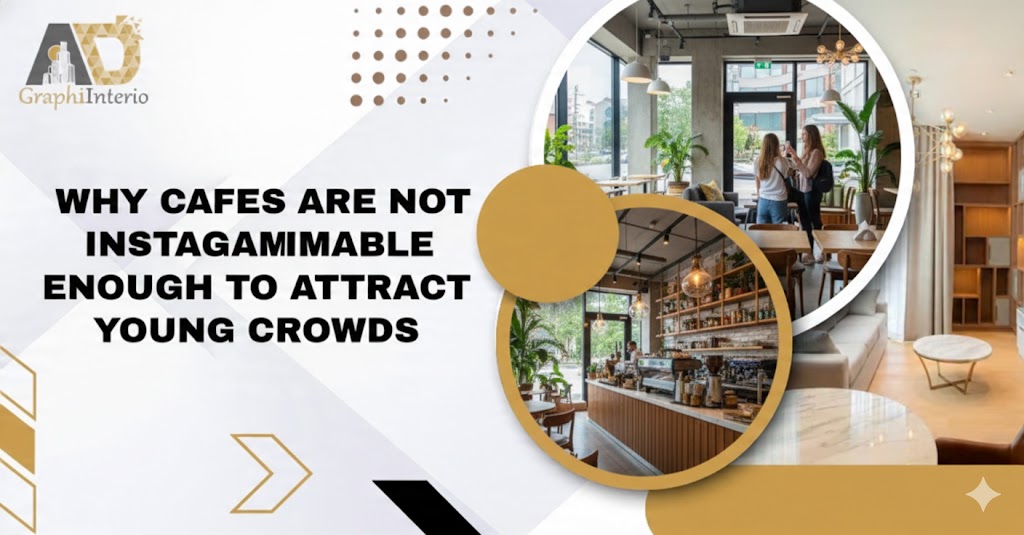
The digital-driven modern world does not require cafes to be evaluated based solely on coffee quality or menu prices. The young generations, particularly Gen Z and millennials, prioritize visual appeal in their choice of places to hang out, socialize, and engage in online activities. Most cafes do not communicate effectively to young people that they have good food, but their interiors do not appear exciting, unusual, or Instagrammable. A cafe that is not easy to see fades away unobtrusively, with no organic promotion and footfall.
The Growing Importance of Instagrammable Café Spaces
An aesthetically designed cafe will make customers take pictures, write about their stories, label places, and generate free publicity. Cafes that fail to embrace this change in consumer behavior fail to gain organic reach, brand recall, and repeat visits. Instagrammable café is not a trend, but rather a combination of the feeling of expressiveness, shareability, and memorability of the place, and the comfort and functionality.
Why Most Cafes Fail to Look Instagrammable to Young Customers
Instagram has proved to be an effective promotional instrument for cafes. Young customers tend to visit cafes according to the quality of the space photos, their uniqueness on social media accounts, and their adherence to the personal aesthetic.
Lack of a Clear Visual Theme
The problem with many cafes is that they attempt to attract all people. The space itself appears to be generic and unmemorable without an obvious visual identity.
- Ambiance not directionally mixed as multi-style.
- Lack of any unified color scheme or design narrative.
- Decoration, which is not design but accidental.
- Lack of a memorable feature that the customers remember.
Poor Lighting That Ruins Photos
The lighting can ruin or improve the appearance of a cafe in the camera. The quality of light is very sensitive in capturing photos or videos by young audiences.
The harsh shadows of overhead white lights.
- Lack of natural light in the daytime.
Dark areas that are not well photographed.
- No evening ambience and accent, and mood lighting.
Ignoring Photo-Friendly Seating and Angles
Most cafes are set in such a way that seating is attended to size, rather than experience or scenery.
- Tables are too close to the camera angles.
- Sitting arrangements that act as barriers to natural lighting.
- No attractive backdrop in seating.
- Old-fashioned chairs and tables that appear to be big.
Walls That Offer Nothing Visually Interesting
Exposed or half-complete walls represent lost possibilities of visual narration.
- Bare walls, unadorned and without art.
- Cluttered walls having unsuitable frames.
- No focusing points or feature walls.
- no designs that mirror the personality of the cafes.
Overuse of Trends Without Originality
Blindly following trends tends to make the cafes look duplicated and dull.
- Neon quotes out of context.
- Excessive industrial or boho motifs.
- Decor ordered in mass production.
- Spaces that appear the same way as the competitors.
Cluttered Interiors That Distract the Eye
Clutters are visual killers, and they make the photos appear untidy.
- Open storage facilities that are exposed to customers.
- An excessive number of elements of decor competing to get attention.
- Untidy counters and shelves
- Cable and equipment mismanagement.
Furniture That Looks Good but Feels Uncomfortable
Young consumers can also spend more time at the restaurant to socialize or work, and being uncomfortable shortens their time.
- Chairs selected on appearance, rather than comfort.
- Tables at awkward heights
- Limited seating variety
- No cozy corners to relax.
No Design Elements That Encourage Interaction
Instagrammable cafes are more about engagement than consumption.
- No whimsical or imaginative design.
- absence of props or interactive decor.
- Static designs that have no experiential areas.
- Filled with passive spaces instead of active ones.
Ignoring Brand Personality in Design
Lack of interior exhibiting the brand story of the cafe leads to customers not being able to relate emotionally.
- No graphic interconnection of menu and interiors.
- Branding to the position of the logo.
- Color schemes that are not brand-friendly.
- No narration with the material and design.
Failure to Adapt to Content Creation Culture
Young customers usually produce reels, vlogs, and aesthetic photos when going to cafes.
- No vertical content spots.
- Inadequate background lighting in videos.
No refractive areas or mirrors.
- Floor plans that are restrictive to movement.
Conclusion
Cafes that cannot appeal to the younger generation tend to ignore the fact that interior design can have a significant impact on the social media profile and customer turnout. Instagrammable cafés are not a chase of trends but rather the realization of how the young audiences perceive spaces in visual, emotional, and digital ways. The choice of lighting and layouts, storytelling, comfort, and more make all decisions of design either stand out or fade into the background when turning a cafe into a shareable place. Considerable interior design makes cafes convert customers into brand ambassadors via organic content and repeat visits. This is where the services of a qualified design team like Interiors By AD come in and enable cafes to design aesthetically pleasing, practical, and brand-oriented spaces that appeal to young patrons and stand out in offline and online spaces.